
Not only do the Brijuni islands have a fascinating history (we’ll get into that later), but they’re known as a haven for nature enthusiasts and serenity seekers, where relaxation thrives thanks to breathtaking beaches, unique flora and fauna, and incredible architectural and cultural heritage. An isolated island group that is just close enough to the murmurs of busier towns on the Istrian mainland, like Fažana, Vodnjan, and Pula, Brijuni is one of Croatia’s best off-the-beaten-path destinations where travelers go to explore under-tourism.
Known as a luxurious tourist resort in Yugoslavia and a famous national park and protected area today, you’ll quickly realize that there is more than Brijuni’s stunning landscapes to draw in nautical tourists.
History
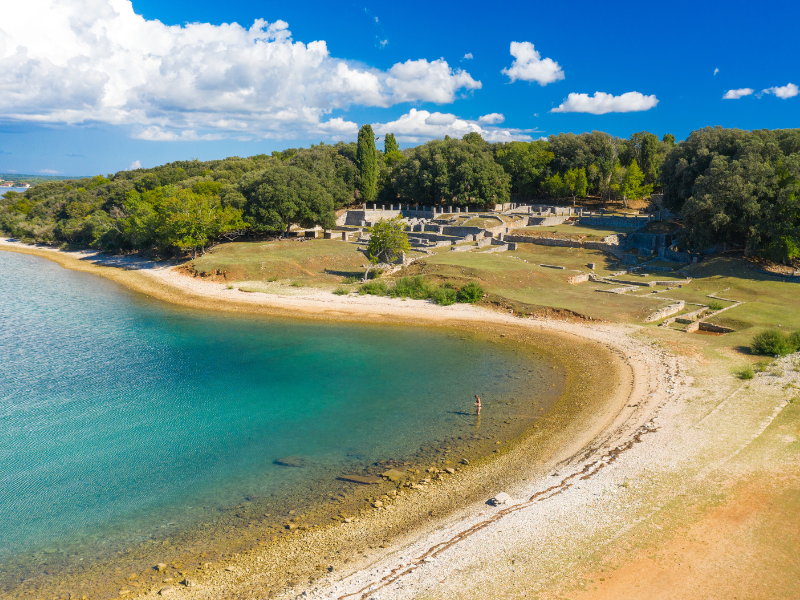
Brijuni’s history dates back to ancient times when the Illyiarians inhabited the area, and the Romans were among the first to discover the benefits of Brijuni’s rural life. The Romans built villas on the islands, the remains of which can still be seen today in the famous Verige Bay. These islands continued to attract the wealthy and became a popular summer residence for Roman and Venetian aristocrats. Over the centuries, the islands were ruled by various powers, including the Venetians, Austrians, and Italians.
The pages to Brijuni’s history became more interesting in the early 20th century when the industrialist and philanthropist Paul Kupelwieser purchased the islands. He transformed Brijuni into a popular tourist resort for the rich and famous. Kupelwieser thus built luxurious villas, hotels, and other amenities on the islands, attracting famous international visitors. He also eradicated malaria on the islands by bringing in famous bacteriologist Robert Koch. The islands then developed and became Austria's fashionable climatic health resort.
The Germans and the Yugoslav Partisans occupied the islands during World War II, after which Brijuni became the summer residence of Yugoslav president Josip Broz Tito. Tito used Brijuni as a venue for state visits and meetings with world leaders and also established a safari park which is still a popular attraction today. This period was known as the golden era for Brijuni, and after Tito died in 1980, the islands became a national park and tourist destination.
Interestingly, Brijuni was inhabited a little over one hundred years ago, with about 700 residents. The last inhabitants, a three-member family of lighthouse keepers, left the same year when excursionists started visiting (1984). Today, visitors can explore Brijuni’s rich history, natural beauty, and diverse flora and fauna, and enjoy hiking, cycling, and golf.
Marinas
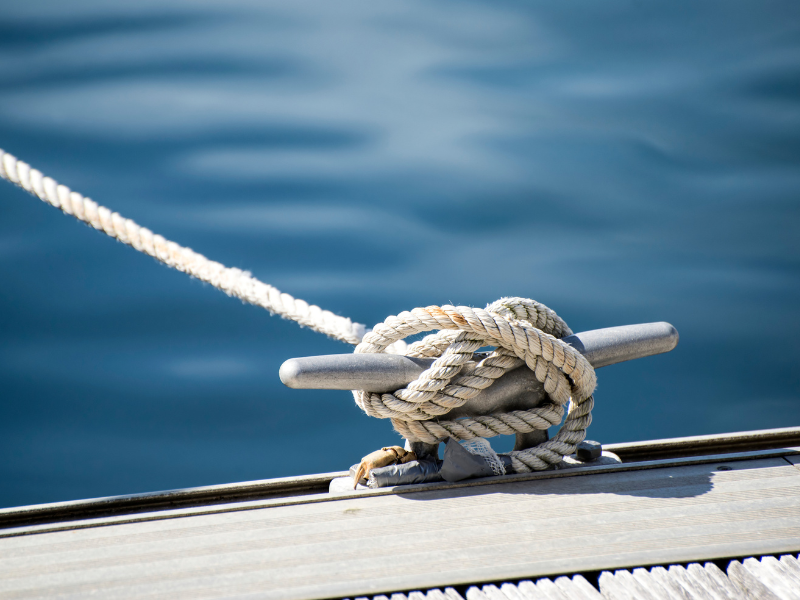
Brijuni is a small paradise for boaters thanks to its indented coastline, microclimate, and favorable geographical location, so it's no surprise that there are facilities for your next sailing trip, located on the two largest islands - Veli Brijun and Mali Brijun.
The main port is located on the island of Veli Brijun and has berths for boats up to 55 meters long. The marina has electricity and water connections and showers and toilets for visitors.
St. Nicholas’ Bay on Mali Brijuni is considered a new nautical destination within the Brijuni archipelago. With an area of approximately 100 hectares, this island was once an integral part of Veliki Brijun. Today, these two islands are separated by the Tisnac Channel. The Mali Brijun coast is adorned with coves and pebbled beaches - a sailor’s dream.
The best time to sail Brijuni is from May to October when the weather is most pleasant. Boaters can explore the pristine natural beauty of the islands, visit historical sites, and enjoy activities such as hiking, swimming, and snorkeling. The marinas also provide access to the restaurants and other facilities on the islands, making them an excellent base for a day trip or a more extended stay.
Beaches
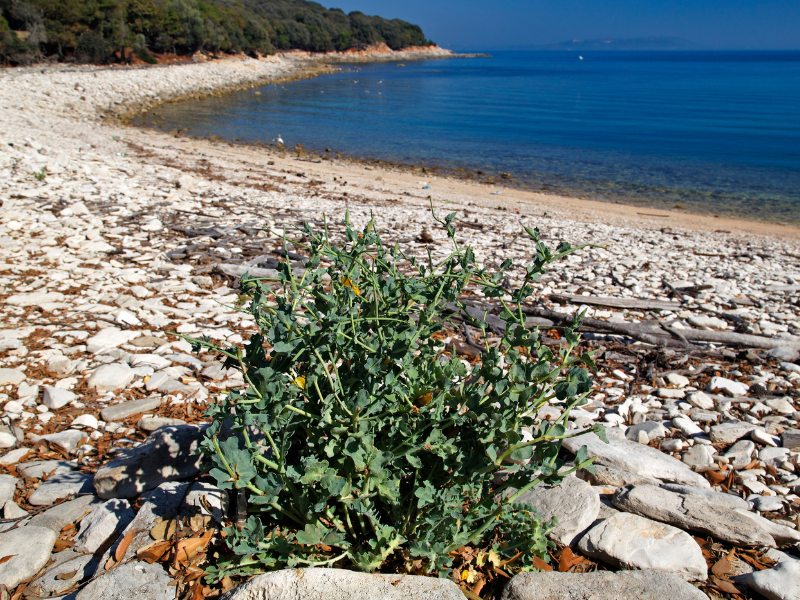
This island group is not shy about its beautiful beaches, each boasting a unique charm, like Verige Bay, a pebble beach on the southern coast of Veliki Brijun island. This gem is ideal for swimming, snorkeling, and sunbathing, thanks to its crystal clear waters and stunning views of the surrounding islands. Kamenjak is another popular swimming area on the southern coast of Veliki Brijun, while the small and secluded Saluga Bay on the northeastern coast of the same island offers boaters a picture of peace, enveloped by centuries-old pine trees and a little bistro nearby.
The small island of Sveti Jerolim is also a perfect beach day spot surrounded by lush greenery. This island got its name from a church and monastery destroyed by stone mining, and only the foundations of this church remain today. But that doesn’t mean there are no amenities here - visitors can rent loungers and umbrellas or recharge at a cafe bar.
Restaurants
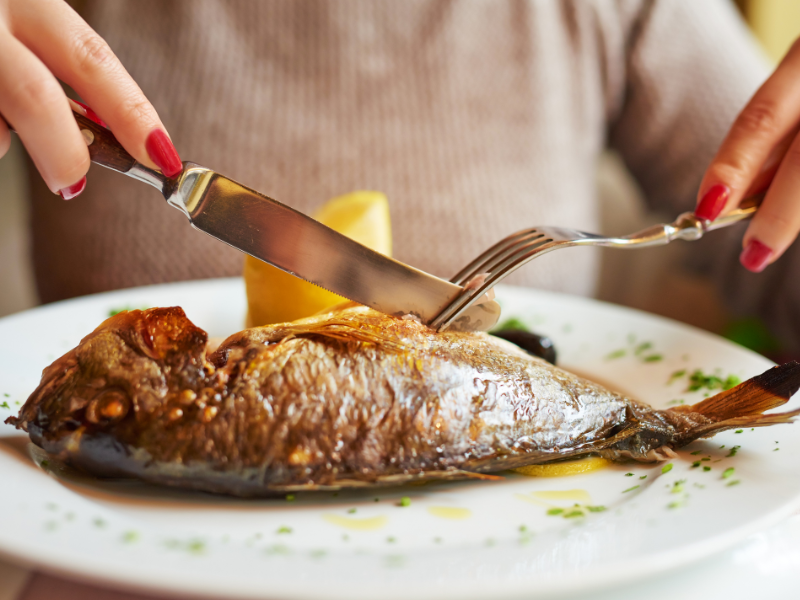
The culinary offer on Brijuni has attracted attention since the beginning of the 19th century when Paul Kupelwieser launched luxury tourism here. While you won’t find many restaurants today, that doesn’t mean you can’t enjoy Istrian cuisine. And let’s not forget you’ll be dining with unbeatable views to enhance the overall experience.
Galija is the most popular restaurant in the national park, located near the central quay. Creative Mediterranean cuisine is embellished with a fresh selection of fish, local meat dishes, and flambéed desserts, while the menu highlights dishes according to old Brijuni recipes.
Neptun is a buffet restaurant located within the hotel of the same name, offering Mediterranean meals to their guests, while the restaurant’s cafe is the best place to cool off with cocktails, coffee, and sweets.
Don’t miss Bistro Plaža if you’re having a beach day in Saluga Bay, where your meal is completed by a view of the Istrian peninsula and shade provided by centuries-old pine trees, and sit back with a coffee or light sandwich at Café Školjka, situated on the ground floor of Villa Magnolija built in 1912.
Attractions
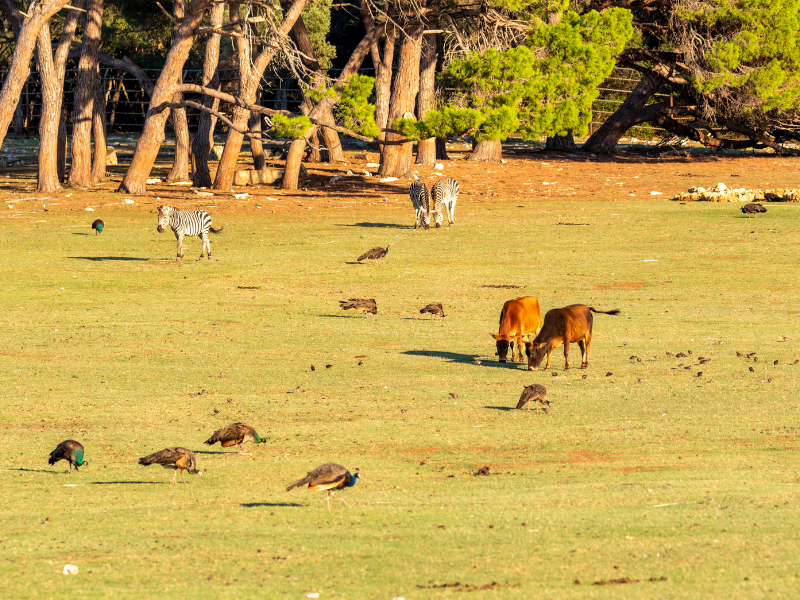
And what about the top tourist attractions? We can’t begin without mentioning the most famous - Brijuni National Park itself. This national park covers an area of about 18 square kilometers, and visitors can explore it on foot or by bicycle, take a guided tour, or enjoy a ride on a tourist train. In addition, the park offers several trails for hiking and cycling that take visitors through its diverse ecosystems, with paths through its lush vegetation and rocky hills. Brijuni National Park also features a range of flora, fauna, and historic sites.
Namely, this national park is home to over 700 species of plants, including several endemic species unique to the region. The park is also home to wildlife, including deer, rabbits, wild boar, and various bird species.
As we have already mentioned, human activity on Brijuni dates back five millennia. And even though these islands have a surface area of only 7 km2, you can explore some 100 localities and archaeological sites from the first neolithic settlements until today. One of the most popular is the Roman villa.
The Roman Villa is a well-preserved site located on the eastern side of Veli Brijun. The villa dates back to the 1st century and features a range of architectural styles, including Roman, Byzantine, and Venetian. You can also explore the underwater Roman remains by snorkeling or diving. St. Mary's Church is another attraction worth visiting. This beautiful three-nave church is found on Mali Brijun and dates back to the 15th century. A highlight is its stunning frescoes and intricate stone carvings. There is also the Byzantine castrum, Venetian castle, and tower, and a fortified Bronze Age settlement.
However, what makes Brijuni special compared to other Croatian national parks are exotic animals from different parts of the world. The Brijuni Safari Park is home to a range of exotic animals, which Tito received as a gift from politicians who visited. The most exotic was certainly Sony, the largest Indian elephant in Europe, which weighed up to five tons. He came to Brijuni in 1970 as a two-year-old baby and was a gift to Tito from Indira Gandhi. He lived with his companion Lanka, an Indian elephant, for about 40 years. Today, only Lanka is alive and celebrated her 50th birthday last year. Today, visitors can also see surviving descendants of zebras and Indian cattle, as well as llamas, Cameroonian goats, and ostriches.
Speaking of animals… Brijuni also features geo-paleontological sites where more than 200 dinosaur footprints have been discovered, dating back 130-100 million years ago! Boaters can see a three-toed print in the limestone block when sailing into the Veliki Brijun port, while dinosaur tracks have been discovered at four sites - Veliki Brijun and the islands Vanga, Galija, and Vrsar. A dinosaur reconstruction, or a scientific and artistic sculpture of the predatory carnivore ‘theropod,’ can be found on Cape Vrbanj.
You should also tour the Mediterranean Garden, created in 2007 on the site of the former forest nursery. Here you can see 169 native and exotic plants, accompanied by plates with QR codes to learn more about each plant species. And, of course, don’t miss a visit to one of the oldest olive trees in the Mediterranean. Not only is the olive tree an integral part of Brijuni's unique landscape, but this tree is about 1600 years old!
Furthermore, Tito's Museum is located on Veliki Brijun and is dedicated to the former Yugoslav leader, Josip Broz Tito. The museum features a range of exhibits, including photographs, personal belongings, and gifts from world leaders. And to end, one of Brijuni’s most exciting attractions - Tito's Cadillac. Parked under a protected dome and in excellent condition, this dark green Cadillac is a luxury old-timer that once covered 18,000 miles when Tito drove it around the islands from 1953 to 1979. He even had famous passengers like Egyptian President Gamal Abdel Nasser, Indian politician Jawaharlal Nehru, Indian Prime Minister Indira Gandhi, Prince Sihanouk of Cambodia, Queen Juliana of the Netherlands, cosmonaut Valentina Terješkova, actors Sophia Loren, Elizabeth Taylor, and Richard Burton, and singer, dancer, and actress Josephine Baker. And the best part? Visitors can rent the famous car for a ride around the island, too!
Overall, Brijuni is a fascinating destination with a world of opportunities for yacht owners and their guests, no matter their interests. If you feel inspired by Brijuni's rich history and offer there is nothing left to do but to match you with a yacht that will take you to this adventure so check out our fleet and contact us for further information!
destinations
destinations
destinations
destinations
destinations
Your Questions Answered
FAQs
-
Timing is one of the most important factors when planning a yacht charter. Different periods of the year offer very different experiences, even in the same destination. Summer months tend to be busier, with more activity in ports and popular anchorages, while spring and autumn often feel quieter and more relaxed. Weather, sea conditions, and local events can all influence your time on board. If you have flexibility with your dates, we strongly recommend sharing that with us. It allows us to suggest alternative weeks, for you to discover more private harbors and sometimes secure better options within your budget.Click for more information
-
Chartering a yacht gives you freedom, privacy, and the chance to explore coastal destinations at your own pace. You can enjoy hidden bays, local culture, and unique activities that aren’t accessible by traditional travel. With a private crew handling all the details, you can focus on relaxing, swimming, trying water sports, and discovering new towns and beaches every day. Yacht charters are ideal for families, groups of friends, or couples seeking a tailored experience on the water.
-
Most yacht charters offer flexible itineraries. While there’s usually a suggested route, you can adjust it based on weather, local events, or your own preferences. Whether you want to spend extra time at a favorite beach, visit a charming town, or explore a quiet cove, your crew can help adapt the plan to make your trip just right.
-
Otium Yachts provides expert guidance, a selection of carefully maintained vessels, and professional crews who know the Adriatic coast inside out. From planning your itinerary to organizing activities and ensuring smooth sailing, Otium Yachts makes yacht charters easy, enjoyable, and reliable. Guests appreciate the personal attention, detailed local knowledge, and thoughtful service that make every charter feel special.
-
The cost of a yacht charter varies depending on the size of the yacht, the season, the number of guests, and the itinerary. Early summer and peak season tend to be higher, while shoulder months may offer more competitive rates. Longer charters or special requests, such as additional activities or private events, can also affect the price. Booking early and working with an experienced broker can help you find the best options for your budget.Click for more information
-
The charter fee generally covers accommodation for all guests, the crew and their expenses, Wi-Fi, use of onboard recreational equipment. Exact inclusions may vary from yacht to yacht, and when you receive a quote, you will be provided with a detailed breakdown of what is included and what is not.
-
APA stands for Advance Provisioning Allowance. It’s a deposit, usually around 25-30% of the charter fee, that covers variable expenses during the charter. This includes fuel for the yacht and tender, food and drinks, port and marina fees, national park entrances, water sports, and any extra services requested by the guests. Before the charter begins, the APA is paid upfront, and the captain or crew manages these costs throughout the trip. Any unused funds are refunded at the end, while any extra expenses beyond the allowance are billed separately. This system ensures your charter runs smoothly without surprises and gives guests flexibility to enjoy the full experience on board.Click for more information
-
An all-inclusive yacht charter means that, in addition to the yacht and crew, most meals, drinks, and onboard amenities are included in the price. This can cover food, beverages, water toys, Wi-Fi, and some activities, allowing guests to enjoy the trip without worrying about extra costs during the charter. Always check the offer details, as inclusions can vary by yacht and operator.
-
The base charter fee usually does not include items such as port or marina fees, national park entrances, shore excursions, special activities like scuba diving or big game fishing, transfers, or APA (Advance Provisioning Allowance) for fuel, food, and drinks. Guests may also have charges for extra navigation, special equipment, or additional services requested during the trip.
-
To secure your booking with Otium Yachts, the first step is signing the charter agreement and paying the initial deposit. The first instalment, which is 50% of the charter fee, is due at the time of signing. The second instalment, covering the remaining balance along with any selected food and beverage packages, is due 45 days before the charter begins. This process ensures your booking is confirmed and gives our team time to prepare everything for a smooth board experience.
-
When booking a yacht, it’s important to know that there are two common types of charter agreements in the Mediterranean: Western Mediterranean Terms (WMT), also known as MYBA Terms, and Eastern Mediterranean Terms (EMT), also known as Gulet Terms. It can seem a bit confusing at first, but here’s a simple breakdown: the type of contract used depends on the yacht owner, who chooses the terms that best suit their vessel and guests. Both options are standard in the industry and provide clear guidelines for what’s included in the charter fee, what costs are extra, and how the trip is managed.Click for more information
-
Yacht charters are governed by industry-standard agreements, such as the MYBA Charter Agreement, which clearly defines cancellation policies. One of the most important clauses in this contract is Clause 11, which outlines the financial consequences of canceling a charter.Click for more information
-
Planning a luxury yacht charter is an exciting experience, full of anticipation. Many guests book their charters months or even a year in advance, hoping everything will go smoothly when the time arrives. But life can be unpredictable, and unexpected events may force you to cancel or postpone your trip. This is where yacht charter insurance plays a vital role, protecting your investment and ensuring your dream getaway remains secure, no matter what challenges arise.Click for more information
-
VAT varies by country because each country sets its own VAT rates and tax rules. Although EU countries follow a common VAT framework, the actual rates and specific conditions differ from one jurisdiction to another. Outside the EU, VAT or similar taxes may not apply at all, or different tax systems may be in place.
-
Pack light and focus on casual, comfortable clothing. Essentials include swimwear, sunglasses, sunscreen, a hat, and non-slip deck shoes. Evenings are usually relaxed, so a few smart-casual outfits are sufficient. Don’t forget personal toiletries, medications, and travel documents. Soft luggage is recommended, as storage space on board is limited.Click for more information
-
A typical day on a yacht is flexible and tailored to your preferences. Mornings often start with breakfast at anchor, followed by swimming or water activities. During the day, the yacht may cruise to a new destination, with lunch on board or ashore. Afternoons are perfect for relaxation, sightseeing, or exploring coastal towns, while evenings are usually spent dining on board or at a local restaurant.Click for more information
-
Yes, itineraries are flexible and can usually be adjusted during the charter, weather and operational conditions permitting. Your captain will advise on the best options to ensure safety and comfort while accommodating your preferences as much as possible.
-
Absolutely. Yacht charters are ideal for first-time guests, as the professional crew takes care of navigation, safety, and daily operations. The experience is fully guided and can be as relaxed or as active as you wish, making it suitable for all levels of experience.
-
Destinations with calm seas, short cruising distances, and well-developed marina infrastructure are ideal for first-time charterers. Popular choices include the Mediterranean, such as Croatia, Greece, Italy and the French Riviera, as well as the Caribbean. These regions offer a wide variety of anchorages, beautiful scenery, and reliable services, making the experience smooth and enjoyable.Click for more information
-
For a one-week charter, routes with short sailing times between destinations work best. This allows guests to enjoy a relaxed pace while still visiting several locations. Circular routes or island-hopping itineraries are especially popular, as they minimize long passages and maximize time for swimming, sightseeing, and dining ashore. Popular itineraries include Split, Hvar, Vis, Kor?ula, and Bra?, or Dubrovnik and the nearby Elaphiti Islands. These routes offer a great balance of exploration, relaxation, and time to enjoy each destination.
-
A round-trip charter starts and ends at the same port, offering a simple and flexible itinerary. A one-way charter begins in one location and ends in another, allowing you to cover more distance and explore a wider area. One-way charters often involve additional fees for yacht repositioning but provide greater variety in destinations.
-
Living onboard a crewed yacht is relaxed and comfortable, much like staying in a floating boutique hotel. The crew takes care of everything, from navigation and safety to meals and daily details, so you can fully unwind. Your days are shaped around your preferences, whether that means exploring new destinations, enjoying the sea, or simply relaxing on deck.
-
A yacht charter offers a very high level of privacy. The yacht is exclusively yours, and the crew is trained to be discreet and respectful at all times. While they are always available when needed, they give guests plenty of space to enjoy their time onboard without interruption.
-
Yes, dietary requirements can usually be accommodated. Before the charter, guests are asked to share any preferences, allergies, or special diets. The chef will tailor the menu accordingly, whether it’s vegetarian, vegan, gluten-free, or based on specific preferences. A Guest’s preference sheet is a simple tool we use to ensure your yacht charter is tailored to your group’s needs and desires.Click for more information
-
Most crewed yachts come equipped with a selection of water toys and amenities, such as snorkeling gear, paddleboards, seabobs, or jet skis, depending on the yacht. Onboard amenities often include spacious lounging areas, air-conditioned cabins, Wi-Fi, and entertainment systems. The exact selection varies by yacht and will be confirmed before your charter.Click for more information
-
Yes, crewed yachts come with a professional and experienced crew. Depending on the size of the yacht, this may include a captain, chef, and additional crew members. They are there to ensure your safety, comfort, and overall enjoyment throughout the charter.Click for more information
-
The captain is responsible for navigating the yacht safely, planning the route, and adjusting the itinerary when needed due to weather or sea conditions. They also act as a local expert, offering recommendations for anchorages, beaches, and restaurants, while making sure your charter runs smoothly.Click for more information
-
Crew gratuity is customary but always at the guest’s discretion. If you feel the crew has delivered excellent service, tipping is a nice way to show appreciation. The usual guideline is around 10-15% of the charter fee, though any amount is entirely optional.
-
Embarkation typically takes place in the afternoon on the first day of the charter, while disembarkation is usually in the morning on the final day. Exact times can vary depending on the yacht and marina, and will be confirmed before your departure.
-
Airport transfers are not always included by default, but they can usually be arranged upon request. Your charter broker or crew can help organize smooth transfers to and from the yacht for an additional fee.
-
All our yachts come with Wi-Fi onboard, so you can stay connected while enjoying your charter. Coverage is generally good near the coast, though it may be limited in more remote areas or while cruising, depending on local signal strength.
-
In case of bad weather, the captain will always prioritize safety. The itinerary may be adjusted, or the yacht may remain in a sheltered bay or marina until conditions improve. These changes are made to ensure a comfortable and enjoyable experience whenever possible.